Jose Rizal
and the Knights of Rizal
Picture a young man who speaks more than twenty languages, builds a startup of dangerous ideas, gets cancelled by the most powerful institution of his time, and changes a nation forever. That is not a Netflix character. That is our guy. Meet Jose Rizal.
19 June 1861 • 30 December 1896
22
Languages spoken
35
Years of life
2
Novels that lit a nation
25k+
Knights of Rizal worldwide
The Man
One life, a hundred lifetimes of work
Born to a prosperous family in Calamba, Laguna, Jose Protasio Rizal became the national hero of the Philippines not through conquest, but through ideas.
Rizal graduated from the Ateneo de Manila at sixteen, trained as an eye surgeon, and studied in Madrid, Paris, and Heidelberg. He came home with a healer's hands and a reformer's resolve.
In 1887 he published Noli Me Tangere, which means "Touch Me Not," a fearless portrait of life under Spanish colonial and friar rule. Its 1891 sequel, El Filibusterismo or "The Reign of Greed," sealed his place as the voice of the Propaganda Movement. He did not call for violence. He called for dignity, representation, education, and equality before the law.
Exiled to remote Dapitan in 1892, Rizal turned a punishment into a calling. He built a school, ran a clinic, and engineered a brick pipe waterworks that carried clean water to the town for more than a hundred years. When the Katipunan rose in revolt in 1896, a movement he had no part in starting, the colonial government tried him for sedition anyway. On the morning of 30 December 1896, he was executed by firing squad at Bagumbayan, now Rizal Park. He was 35.
His death did what his books began. It convinced a nation that there was no path left but freedom.
The reformer, not the rebel
Rizal wanted Filipino representation in the Spanish parliament, Filipino priests, and free speech. Reform from within. The tragic irony is that executing the peaceful reformer made peaceful reform impossible and independence inevitable.
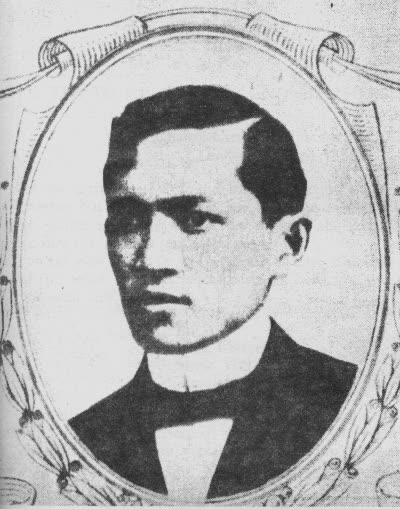
Written in a lamp
His final poem, Mi Ultimo Adios, was written in his cell and hidden inside an alcohol cooking stove, then smuggled out to his family the day he died.
The Journey
From Calamba to immortality
1861
Born in Calamba
The seventh of eleven children in a well to do family in Laguna.
1879
"A la Juventud Filipina"
At 18 he wins a literary prize and calls the youth the fair hope of the fatherland.
1887
Noli Me Tangere
His first novel exposes colonial and friar abuses, and is promptly banned.
1891
El Filibusterismo
The darker sequel cements his role as the leading voice of the movement.
1892
La Liga Filipina and exile
He founds a peaceful reform league, then is deported to Dapitan in Mindanao.
1896
Martyrdom
Executed at Bagumbayan on December 30, now honored as Rizal Day.
1911
Knights of Rizal born
Nine men gather on Rizal Day to keep his teachings alive.
1951
Republic Act 646
The Order is chartered by law as a civic and patriotic body.
Did You Know
The most interesting man of the 19th century
Rizal packed an almost unbelievable range of talents into just 35 years. A few favorites:
Spoke 22 languages
From Tagalog, Spanish, and English to Latin, Greek, German, Japanese, Arabic, Sanskrit, and Russian. He taught himself most of them.
PolyglotSpecies named after him
During his Dapitan exile he sent specimens to Europe and earned three namesakes: a flying lizard (Draco rizali), a frog (Rhacophorus rizali), and a beetle (Apogonia rizali).
NaturalistSculptor at 14
He carved a Sacred Heart statuette from batikuling wood as a teen, and later sculpted "Prometheus Bound" while studying in Europe.
ArtistAn eye surgeon
He trained in ophthalmology partly to cure his own mother's failing eyesight, and he did exactly that.
PhysicianBuilt a waterworks
His water system in Dapitan delivered clean water to the town for more than a century. An engineering feat by a man with no engineering degree.
EngineerA farewell in a stove
Mi Ultimo Adios, one of the great poems in the Spanish language, was hidden in a cooking lamp and smuggled out hours before he died.
PoetIf He Lived Today
Honestly, Rizal would get us
Strip away the 1800s wardrobe and you have someone who would fit right into your group chat. Overachiever, world traveler, low key roasting the powerful in print.
Wrote two banned novels exposing corruption
The friend who posts the receipts and will not let injustice slide
Studied in Manila, Madrid, Paris, and Germany
The study abroad kid repping the Philippines everywhere
Doctor by day, novelist and scientist by night
Full time job plus three side hustles plus a passion project
Taught himself 22 languages
The Duolingo streak none of us will ever touch
Built a school and a clean water system while exiled
Bloom where you are planted. Community work, no spotlight needed
Believed the youth are the hope of the nation
Mentors, scholarships, and showing up for the next generation
He was not a marble statue. He was a twenty something figuring it out, homesick abroad, in love, picking fights worth picking, and choosing his people over his own comfort. That choice is the whole point.
The youth is the fair hope of the fatherland.Jose Rizal, "A la Juventud Filipina," 1879
"Bella esperanza de la Patria mia," popularly rendered in Filipino as "Ang kabataan ang pag asa ng bayan."
The Order
The Knights of Rizal
A brotherhood that turned remembrance into a living mission, carrying Rizal's ideals across more than 190 chapters worldwide.
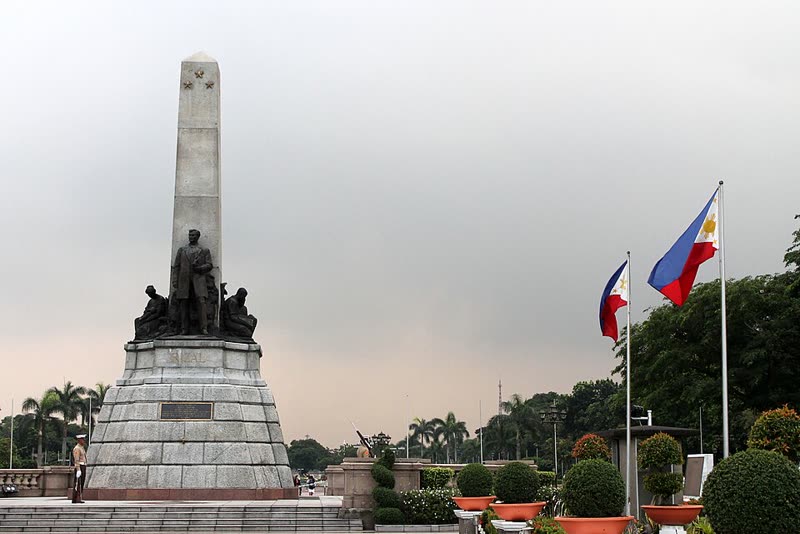
From nine men to a global order
On Rizal Day, 30 December 1911, Manila police chief Colonel Antonio C. Torres gathered nine men to honor the national hero. Incorporated in 1916, the Order was later granted a legislative charter by President Elpidio Quirino as Republic Act No. 646 on 14 June 1951. It is the only order of knighthood created by law in the Philippines.
"To study the teachings of Dr. Jose Rizal, to inculcate and propagate them among all classes of the Filipino people, and by words and deeds exhort our citizenry to emulate and practice the examples and teachings of our national hero."
Today the civic order is open to everyone, with no politics and no religion attached. It numbers more than 25,000 Knights across roughly 130 chapters in the Philippines and 60 or more abroad, including chapters across the United States.
The Five Degrees of Knighthood
- 1Knight of Rizal (KR)First degree. Admission and initiation into the Order.
- 2Knight Officer of Rizal (KOR)Second degree. Earned after service and recommendation.
- 3Knight Commander of Rizal (KCR)Third degree. For sustained dedication and leadership.
- 4Knight Grand Officer of Rizal (KGOR)Fourth degree. Among the highest honors of the Order.
- 5Knight Grand Cross of Rizal (KGCR)Fifth and highest degree of the Order.
You do not need a title to start
Students, professionals, parents, and retirees all wear the same first degree on day one. What you bring is heart and a willingness to serve.
Why It Still Matters
Rizal in our world today
His era was colonial Spain, but the questions he asked are the ones our communities still wrestle with.
Education as power
Rizal believed an educated people could never be enslaved. For families raising children far from home, his life is the case for knowing your roots and investing in the next generation.
Speak up, peacefully
He fought injustice with words, evidence, and reason. In an age of outrage and noise, Rizal models civil courage. Confront what is wrong without losing your humanity.
Serve where you stand
In exile he still built schools, healed patients, and brought water to a town. You do not need a stage to change a community. You need a committed mind and a compassionate heart.
One identity, many talents
Doctor, writer, scientist, artist, linguist. Rizal refused to be put in a box. He is proof that being well rounded and proudly Filipino is a strength, not a contradiction.
The youth are the hope
His most quoted line is a charge to young people. Knights of Rizal youth programs and scholarships around the world turn that sentence into mentorship and opportunity.
A bridge across borders
From Manila to Madrid to New Jersey, Knights of Rizal chapters give overseas Filipinos a way to stay connected to heritage, history, and each other.
Carry the Light
He would have wanted you in this
Rizal believed one committed person could change a community. The Knights of Rizal is how everyday people keep that going today through brotherhood, service, scholarships, and pride in who we are. No nobility required. Just heart.
Find your nearest chapter, come to a meeting, and bring a friend. That is all it takes to start.
Keep exploring: The Works of Rizal · Rizal's Travels
Non Omnis Moriar, meaning "Not all of me shall die." Photographs are public domain, courtesy of Wikimedia Commons. Facts cross checked across Britannica, Wikipedia (Jose Rizal and Knights of Rizal), the National Historical Commission of the Philippines, Inquirer, Rappler, and JoseRizal.com. Membership and chapter figures are approximate and change over time.