Knights of Rizal · Orlando Chapter

Flags of the Heroes
of the Revolution

Ten banners. Ten heroes. Each flag was stitched by hand, carried into gunfire, and soaked in meaning most Filipinos today have never been told.

Picture 1896. There is no Philippines yet. Only a secret brotherhood, a scatter of rebel provinces, and a dream worth dying for. The men who set the revolution on fire did not march under one flag. Each raised his own.

Red for the blood of their oaths. A rising sun for the freedom they could almost taste. And on one flag, a grinning skull, a promise to the enemy that these men had already made peace with death. These ten designs were later sold to the public as the “Evolution of the Philippine Flag.” It is a gorgeous set. It also hides a twist that historians are still arguing about. Stay until the end for that part.

Listen to the story

The Ten Banners of the Philippine Revolution

Prefer to listen? Press play for the full story of these ten flags and the heroes who carried them. (49-min listen)

First, the three letters everyone asks about

The KKK on these flags has nothing to do with the American hate group that shares the initials. It stands for Kataas taasang, Kagalang galangang Katipunan ng mga Anak ng Bayan, the Supreme and Venerable Society of the Children of the Nation, founded by Andrés Bonifacio in 1892. The deep red field is the color of blood, because new members signed their oath in their own.

Ten Flags, Ten Heroes

The banners of the revolution

KKK
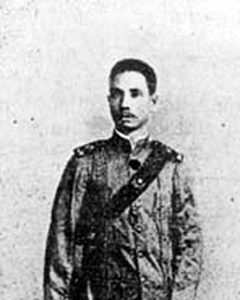
Andrés Bonifacio
Andrés BonifacioThe SupremoFounder of the Katipunan who turned a secret society into a revolution.

The banner of the brotherhood

01The First Katipunan Flag

Flown at the Cry of Pugad Lawin, August 1896

This is the flag that started a revolution.

Three white K’s on a field of blood red. Simple, defiant, impossible to mistake. A banner like this flew when Katipuneros tore up their Spanish tax certificates and shouted for freedom at the Cry of Pugad Lawin. Days later it caught its first bullets at the Battle of San Juan del Monte.

Type: OrganizationalEra: c. 1896Meaning: Blood oath
KKK
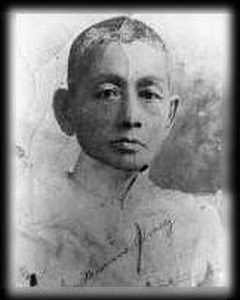
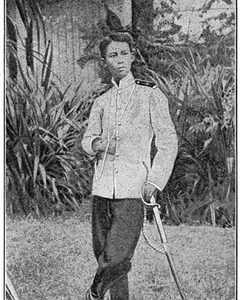
Emilio Jacinto
Emilio JacintoBrains of the KKKAt only 21 he wrote the Katipunan's teachings and code of honor.

Same brotherhood, a hundred hands

02Variants of the Katipunan Flag

The triangle K and the single K

No two chapters sewed it exactly alike.

Some cells arranged the three K’s into a triangle, one on top and two below, echoing the secret triangular oath of the society. Others flew a single bold K. These were not rival emblems. They were the handmade fingerprints of a movement spreading faster than it could ever be standardized.

Type: OrganizationalEra: c. 1896Shape: The secret triangle
KKK
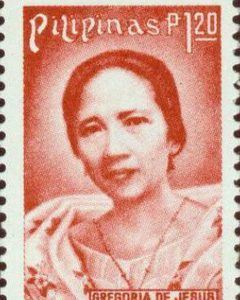
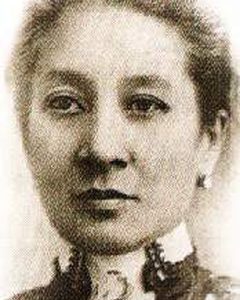
Gregoria de Jesús
Gregoria de JesúsLakambiniBonifacio's wife. She guarded the society's seal and documents, and helped sew this flag.

Carried by the Supremo himself

03Bonifacio's War Standard

Personal flag of Andrés Bonifacio

The Father of the Revolution flew a sunrise into battle.

A white sun climbing over three white K’s. The sun meant liberty, the dawn breaking over three centuries of colonial night. Here is the detail people love: it was sewn by Bonifacio’s wife, Gregoria de Jesús, the Lakambini of the Katipunan, working beside Benita Rodríguez. A flag made by the very hands it was meant to free.

Carried by: Andrés BonifacioSewn by: Gregoria de Jesús
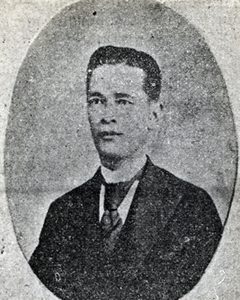
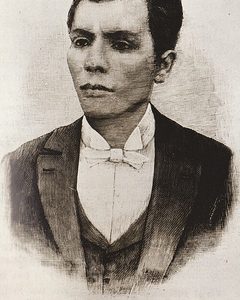
Mariano Álvarez
Mariano ÁlvarezMagdiwangLeader of the Magdiwang council in Cavite and an uncle of Gregoria de Jesús.

The council of the south

04The Magdiwang Flag

Attributed to the Magdiwang faction of Cavite

When the revolution reached Cavite, it split in two.

The Magdiwang, led by Mariano Álvarez, is remembered for a blazing white sun that fills the whole field, its rays standing for the radiant promise of liberty. It is one of the most striking banners in the set. It is also, as you will read below, one of the most debated.

Faction: MagdiwangAttribution debated
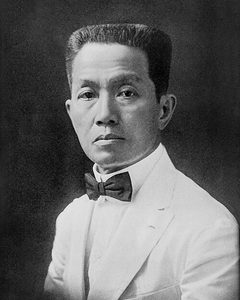
Emilio Aguinaldo
Emilio AguinaldoMagdaloLeader of the Magdalo council and later the first President of the Philippines.

The council of the north

05The Magdalo Flag

Attributed to the Magdalo faction of Emilio Aguinaldo

At its heart sits a letter older than Spain itself.

The rival council, the Magdalo of Kawit, rallied around the young Emilio Aguinaldo. Its sun cradles an ancient Tagalog “Ka,” written in pre colonial baybayin script. The message was electric. This was a nation reaching past three hundred years of conquest to an identity that was theirs long before any galleon arrived.

Faction: MagdaloDetail: Baybayin “Ka”Attribution debated
K
Mariano Llanera
Mariano LlaneraThe Skull GeneralCarried the black flag across Central Luzon. Fearless, and a little theatrical.

Psychological warfare, 1896

06The Skull Flag, Bungo ni Llanera

Personal flag of General Mariano Llanera

Some flags inspire. This one was built to terrify.

A white K beside a skull and crossbones on funeral black. General Mariano Llanera flew it across the killing grounds of Nueva Ecija, Bulacan, Pampanga, and Tarlac. It told the enemy one thing plainly: these men do not fear dying. Even Bonifacio could not resist teasing him, nicknaming it Bungo ni Llanera, Llanera’s Skull.

Carried by: Gen. Mariano LlaneraNickname: Bungo ni Llanera
KKK
Pio del Pilar
Pio del PilarGeneral of MakatiHis triangle and sun pointed straight toward the flag we know today.

The shape of a nation, forming

07Pio del Pilar's Flag

Personal flag of General Pio del Pilar of Makati

Look closely. You are watching the modern flag being born.

A white triangle at the hoist, a sun at its center, a K at each of the three corners. This was the standard of General Pio del Pilar, the fierce commander of San Pedro de Macati. The triangle and the rayed sun are the exact elements that would define the national flag. The eight rays were said to honor the first eight provinces that Spain placed under martial law for daring to revolt.

Carried by: Gen. Pio del PilarRays: The first eight provinces
1897
Biak-na-BatoThe RepublicThe short lived republic declared by Aguinaldo before the 1897 truce.

The sun comes alive

08The Sun With a Face, Biak-na-Bato

Linked to the Republic of Biak-na-Bato, 1897

Why give the sun eyes, a nose, and a mouth?

This mythological sun radiates eight clusters of three rays each and gazes back at you. It is tied to the short lived Republic of Biak-na-Bato, declared by Aguinaldo in late 1897. The human face gave the rising sun a soul. It was the nation itself, awake at last and watching over its people.

Era: 1897Rays: Eight clusters of threeAttribution debated
Gregorio del Pilar
Gregorio del PilarThe Boy GeneralDied at 24 at Tirad Pass so President Aguinaldo could escape.

The first Filipino tricolor

09Gregorio del Pilar's Flag

Personal flag of the Boy General of Tirad Pass

A 24 year old general died defending the man behind this flag.

The dashing young Gregorio del Pilar fell at the Battle of Tirad Pass in 1899, holding off the Americans so President Aguinaldo could escape. His tricolor carries a story in every color. Red for the Katipunan’s sacrifice, black inspired by Llanera’s defiant banner, and a triangle patterned after the flag of revolutionary Cuba, a fellow colony fighting the same empire. Filipino freedom, standing in solidarity with the world’s.

Carried by: Gen. Gregorio del PilarInspired by: Cuba
Marcela Agoncillo
Marcela AgoncilloMother of the FlagSewed the first national flag by hand in Hong Kong in 1898.

The nation, at last

10The Flag of the Philippines

First unfurled in 1898

Every banner before it was pointing here.

Sewn in Hong Kong by Marcela Agoncillo, her daughter Lorenza, and Delfina Herbosa de Natividad, a niece of Dr. José Rizal, the national flag gathered the whole revolution into one cloth. The white triangle of the Katipunan. The eight rayed sun for the first eight provinces to rise. Three stars for Luzon, Visayas, and Mindanao. Blue for peace and justice, red for courage. To this day it flies red side up only when the country is at war.

Sewn by: Marcela AgoncilloStars: Luzon, Visayas, MindanaoSince: 1898

The twist every Filipino deserves to know

This famous set is sold as the “Evolution of the Philippine Flag,” but historians warn that the name tells a false story. The modern flag did not slowly grow out of these banners. They were separate flags of different leaders and councils, many of them flying at the same time. The National Historical Commission prefers the honest name, “Flags of the Philippine Revolution.” Historian Xiao Chua goes further, pointing out there is little hard evidence for three of them, the supposed Magdiwang, Magdalo, and the sun with a face, and that this neat set of ten represents only a fraction of the dozens of battalion flags that actually flew. Honoring our heroes means honoring the real history, questions and all.

“While a people preserves its language, it preserves the marks of its liberty.”

Dr. José Rizal

Non Omnis Moriar · I shall not wholly die

Sources and further reading

  1. Evolution of the Philippine Flag, Wikipedia, set overview and historians' critique
  2. Flags of the Philippine Revolution, Wikipedia
  3. The Philippine Flag: Symbol of our Sovereignty and Solidarity, National Historical Commission of the Philippines
  4. Symbolisms and Meanings in the Philippine Flag, National Commission for Culture and the Arts
  5. Ambeth Ocampo, “Unlearning flag history”, Philippine Daily Inquirer
  6. Reference flag artwork and hero portraits: Wikimedia Commons (public domain)

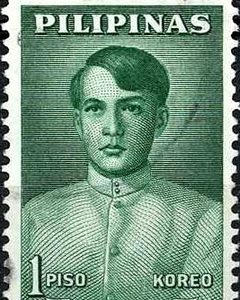
Flags are faithful vector reproductions drawn for crisp display at any size. Hero portraits are public-domain images from Wikimedia Commons, self-hosted for speed; for Emilio Jacinto and Gregoria de Jesús — who have no widely accepted photographic portrait — we use their Philippine commemorative postage stamps, the customary public-domain likenesses. Several designs marked “attribution debated” are traditional reconstructions rather than verified originals.

Keep exploring: Jose Rizal · Anthems of the Revolution · Rizal's Travels